Income from operations stood at Rs 1,375.3 crore (Rs 13.75 billion) during the January-March quarter of 2011.
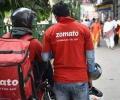
Investors are increasingly turning optimistic about shares of new-age companies. From broad-based 'sell' calls, analysts are giving thumbs up to Zomato, Paytm, and FSN e-Commerce Ventures-owned Nykaa as these companies have shifted focus to sustainable profits. The shares of Zomato hit a fresh 52-week high of Rs 126 apiece on the BSE on November 7, having rallied 15.4 per cent in one week.

India witnessed the highest increase in airfares among the 10 top aviation markets in the Asia-Pacific and West Asia collectively across both domestic and international flights Q4 2019 and Q4 2022 in nominal terms, according to research by Hong Kong-based Airports Council International (ACI). India, where fares went up by 41 per cent, was followed by the UAE (34 per cent), Singapore (30 (per cent) and Australia (23 per cent). The study, which was undertaken in collaboration with Flare Aviation Consulting, examined around 36,000 routes in the top 10 aviation markets in Asia-Pacific and West Asia.

Except for Westlife Foodworld (Westlife), a weak 2022-23 (FY23) January-March (fourth quarter, or Q4) quarter performance and a muted near-term outlook led to a downward revision of earnings estimates for quick-service restaurant (QSR) players. Brokerages have slashed estimates by as much as 10 per cent for 2023-24 (FY24) and 2024-25 (FY25). The downward revisions have weighed on the performance of listed players, who have underperformed the market with low single-digit returns over the past month.


Revenue soared 6.2 per cent to Rs 20,602.2 crore for the three months ended March 31, 2019.

Lower crude oil costs and higher marketing margins are expected to raise the fortunes of oil marketing companies (OMCs) in the first quarter (Q1) of 2023-24 (FY24), while city gas distribution (CGD) companies could also benefit from lower spot prices of liquefied natural gas (LNG). However, in a break from the past, growth trends are expected to diverge for various segments within the broad energy sector. Analysts expect the earnings from gas production to go down for upstream national oil and gas companies such as Oil and Natural Gas Corporation (ONGC) and Oil India (OIL) due to the introduction of the new domestic gas pricing regime on April 1. After showing steep losses over the first half of 2022-23 (FY23), the marketing margins of OMCs have steadily recovered in four months.
Zomato has lost over 9 per cent thus far in calendar year 2023 (CY23) and has underperformed the S&P BSE Sensex that has slipped nearly 5.3 per cent during this period. Despite this underperformance, analysts at HSBC think that the stock can hit Rs 87 going ahead - up over 64 per cent from the current levels. The food delivery industry, wrote Yogesh Aggarwal and Abhishek Pathak of HSBC in a recent note, has slowed considerably in the last few months.

The country's largest carmaker Maruti Suzuki India (MSI) on Tuesday reported 6.14 per cent decline in consolidated net profit at Rs 1,241.1 crore for the fourth quarter ended March 31, 2021. The auto major had posted a net profit of Rs 1,322.3 crore in January-March quarter of 2019-20, MSI said in a regulatory filing. However, revenue from sale of products stood at Rs 22,959.8 crore as compared with Rs 17,187.3 crore earlier, up 33.58 per cent.

Logistics services provider Delhivery posted a mixed set of results during the March quarter of the previous financial year (Q4 of FY23). While its operating profit was marginally in the green, its net losses widened as compared to the year-ago quarter. Overall revenues, which were in line with estimates, fell 10 per cent year-on-year (YoY).

Due to unseasonal rains, the second quarter of financial year 2023-24 (Q2FY24) was disappointing for the room-air conditioner (RAC) segment and Q3FY23 was also slow. While general consumption demand was low in Q3FY24, the low base and the pent-up demand from the first half of financial year 2023-24 (H1FY24) seem to have driven an off-season demand for RACs.

Hospitals to recover from sluggish Q3; diagnostics' growth rate at pre-Covid levels.
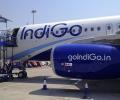
InterGlobe Aviation, the operator of India's leading airline IndiGo, delivered a better than expected performance across most parameters in Q2FY24. The company posted its fourth consecutive quarter of net profit of Rs 188 crore. It had reported a loss of Rs 1,583 crore in the same quarter a year ago.
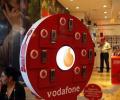
Vodafone Idea, the country's third largest telecom operator, on Wednesday reported a staggering Rs 73,878 crore of net loss in fiscal ended March 2020 -- the highest ever by any Indian firm -- after it provisioned for Supreme Court-mandated statutory dues. The firm, which has to pay Rs 51,400 crore dues after the apex court ordered the non-telecom revenues to be included in calculating statutory dues, said the liability has "cast significant doubt on the company's ability to continue as a going concern".

Layoffs, corporate restructuring, governance and most importantly profitability: The 14 Indian startups that plan IPOs this year are pulling out all the stops to ensure successful market debuts.
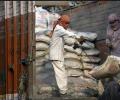
The recent price correction in broader markets has hit cement companies hard. So far in the current month, smallcap firms like Visaka Industries, Andhra Cements NCL Industries, Sahyadri Industries, and KCP have lost 19.7 per cent, 14.3 per cent, 13.8 per cent, 13.5 per cent, and 11.5 per cent, respectively. On the contrary, largecap companies, while registering losses for the month, have seen a softer blow.

Domestic-focused agricultural chemical (agrochem) companies could face near-term headwinds, given the worries on the El Nio effect on monsoons, higher inventory, and pressure on margins. Some of these were reflected in the October-December quarter (third quarter, or Q3) results of companies and may impact them in the current quarter (fourth quarter, or Q4) as well. Nuvama Research pointed out that the sector witnessed mixed performance during the quarter as global agrochem and domestic fertiliser companies maintained growth momentum, while adverse agronomical conditions and excess channel inventory weighed on domestic market volume offtake.

Shares of Jet Airways on Wednesday tanked over 10 per cent in the morning trade as the airline has posted its highest-ever annual loss of Rs 4,129 crore (Rs 41.29 billion).
The country's largest private sector lender HDFC Bank on Saturday reported a 23 per cent jump in standalone net profit to Rs 10,055.20 crore for the March quarter, led by growth in loan demand across categories and lower provisioning as bad loans were trimmed. The bank's net profit during the corresponding period of the previous fiscal stood at Rs 8,186.51 crore. "After providing Rs 2,989.5 crore for taxation, the bank earned a net profit of Rs 10,055.20 crore, an increase of 22.8 per cent over the quarter ended March 31, 2021," HDFC Bank said in a regulatory filing.

Since its results for the first quarter of the 2023-24 financial year (Q1FY24) earlier this month, the stock of auto component major Bharat Forge is up nearly 15 per cent and hit its all-time high in the process. The recent gains have extended the returns over the last three months to over 34 per cent. After a strong Q1 performance which beat expectations, brokerages had revised their earnings estimates upwards to factor in the improved outlook.

There has been a sharp recovery in the headline corporate earnings in the April-June 2023 quarter (Q1FY24), after a dismal showing by early bird companies. The combined net profit of the 983 listed companies that have declared their quarterly results, so far, was up 64.7 per cent year-on-year to record a high of Rs 2.68 trillion in the first quarter, but growth in earnings remained lopsided because most of the incremental gains came from a handful of companies. Moreover, the quarterly numbers showed a continued slowdown in revenue growth.

Together, the top 10 business groups reported a pre-tax loss of Rs 19,342 crore during the January-March 2020 quarter, as against a profit before tax of around Rs 48,500 crore in the year-ago period and Rs 39,600 crore during the December quarter. While Vedanta was the worst hit. others included Aditya Birla, Bharti, Adani, Mahindra, and Tata.

The June quarter numbers of the country's largest listed healthcare services provider, Apollo Hospitals Enterprise (Apollo), were in line with Street estimates on the operational front. Net profit estimates, however, missed expectations due to higher interest and tax outgo. The revenue performance of the core hospital segment was robust, registering a 13 per cent increase over the year-ago quarter.

Combined profit before tax of 81 firms down 37.5% y-o-y, worst show in at least 3 years.
At Rs 919 crore, InterGlobe Aviation, the parent firm of low-cost airline IndiGo, posted its best-ever fourth quarterly net profit in the January-to-March quarter (Q4) of financial year 2022-23 (FY23). The bottom-line, however, was lower than the Street's expectations where estimates ranged from Rs 1,160 crore to Rs 2,180 crore. On the bourses, shares of IndiGo have added just 30 paise (0.01 per cent) since the announcement of the Q4-FY23 results on May 18.

Analysts refuse to read too much into the early birds numbers.

Most analysts have downgraded the stock of SBI Cards and Payments (SBI Card) as the credit card issuer posted weak results during the December quarter (Q3) of financial year 2023-24 (FY24). The sub-par show, analysts said, was for the eighth straight quarter. With this, they have slashed their earnings estimates by as much as 20 per cent over FY24-26 amid near-term pressure points in the company's growth outlook.

There's a straightforward relationship between economic activity and power consumption. If economic activity increases, so does power consumption. Since the latest GDP (gross domestic product) data indicates India's growth rates exceeded expectations in the second half if the 2022-23 financial year (H2FY23) and GDP estimates of FY24 are strong, we would expect power consumption to rise as indeed it has. There is also a direct relationship between power consumption and National Thermal Power Corporation or NTPC's results since the public sector undertaking (PSU) is the largest power generator in India.

Jet Airways has clocked a net profit of Rs 53 crore (Rs 530 million) in the fourth quarter of 2008-09.The private air carrier had posted a loss of Rs 221 crore (Rs 2.21 billion) in the year-ago period.

Slowing growth and execution challenges for Cognizant (CTSH) may well allow Infosys to overtake the former after a decade. Cognizant had marched ahead of Infosys in terms of revenue in the first quarter of financial year 2012-13. The Nasdaq-listed IT services firm's performance in Q3 and the guidance for Q4 and full-year 2022 suggest that it could take time for Cognizant to see the expected improvement in performance from its decision to restructure.

However, the SBI report said it will take almost seven-quarters from Q4 FY21 to reach the pre-pandemic level in nominal terms and there will be a permanent output loss of around 9 per cent of GDP.

Fiscal pressure for the Indian economy is gradually rising, suggested analysts at Jefferies in a recent note, as oil prices (Brent) - which are close to the $100 a barrel mark - continue to climb ahead of a busy election calendar. They added that the sharp rally in the equity markets during the last few months has made valuations costly. As a result, Jefferies expects the Indian markets to remain choppy in the near term.
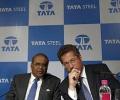
The company stock ended up 4.49 per cent.

Among the Sensex firms, HCL Technologies fell the most by 2.4 per cent. IndusInd Bank (2.35 per cent), Infosys (2.28 per cent), Wipro (1.8 per cent), NTPC (1.71 per cent), Asian Paints (1.7 per cent), Tata Consultancy Services (1.36 per cent),Tech Mahindra (1.03 per cent) and SBI (1 per cent) were among the major laggards.

ONGC's January-March quarter results for the 2022-23 financial year (Q4FY23) indicated changes in the trends of the energy cycle as well as the impact of policy change in gas-pricing. The public sector oil and gas major reported standalone Ebitda (earnings before interest, tax, depreciation and amortisation) at Rs 16,340 crore, down 12 per cent year-on-year (YoY), and down 20 per cent quarter-on-quarter (QoQ). There was a net loss of Rs 250 crore due to exceptional items of Rs 9,240 crore for provisions related to the ongoing dispute regarding the applicability of service tax and goods and services tax on Royalty.
Airtel reported a 19 per cent rise in its ARPU in the March quarter, as it removed the non-paying users from its network.

Shares of RIL ended 2.4% higher as it pips TCS to become most valued firm

The S&P BSE Sensex plunged 128 points to end at 25,102.

The country's gross domestic product (GDP) is likely to grow more than 9.5 per cent in fiscal 2021-22, an SBI research report-Ecowrap said. The economy grew at 8.4 per cent in the second quarter of the current fiscal, according to data released by the National Statistical Office (NSO) on Tuesday. The growth in the April-June quarter of this fiscal stood at 20.1 per cent. In October's monetary policy review, the Reserve Bank of India had retained its projection for real GDP growth at 9.5 per cent in 2021-22, consisting of 7.9 per cent in Q2; 6.8 per cent in Q3; and 6.1 per cent in Q4 of 2021-22.

Sharp improvement in refining margin is expected to be the prime driving force.
